Pages

Showing posts with label New Orleans. Show all posts

2.16.2012

Laissez Les Bon Temps Rouler - Day Five

The limited availability of flights that American was willing to give us for free through their frequent flyer program meant that we had nearly an entire day left in New Orleans before we had to head home. Though we pondered a variety of breakfast options to begin our last day in town, we decided to be honest with ourselves and admit that we really just wanted to go back to Cafe du Monde for more beignets. They're really that good -- if you find yourself in New Orleans, you absolutely must eat them!

Though the timing of our trip allowed us to get a taste of Mardi Gras season without experiencing the insanity first hand, we decided to delve a little deeper into the annual celebration by doing the single most touristy thing of our entire trip: going to Blaine Kern's Mardi Gras World. Despite its name, Mardi Gras World is not, in fact, a Mardi Gras-inspired theme park, but rather, the production and storage facility of Blaine Kern Studios, the company responsible for designing and manufacturing some 90% of the floats used for the Mardi Gras parades. It's open year-round to tourists, and it offers the additional perk of providing shuttle service throughout the French Quarter and parts of the Central Business District. All you have to do is call them, and they dispatch a shuttle to come get you. The cost is surely built into the outrageous admission fee, but it's convenient nonetheless.


A visit to Mardi Gras World includes a piece of king cake, the coffee cake-like confection of yeasted dough wrapped around a cinnamon-sugar filling, topped with sanding sugar in the green, purple, and yellow colors of Mardi Gras, along with a brief video explaining the Mardi Gras culture, and, most significantly, a tour through the float production facility. The tour itself was pretty lame, and not particularly informative. Our specific tour was made all the worse by the inclusion of a pre-school group, which required a general lowering of the level of discourse for the outing. However, the real draw behind Mardi Gras World is that after the tour, they allow visitors to basically wander the warehouse unsupervised, for as long as you care to stay.

The king's throne from the floats of the krewe of Tuck's.
From a safety standpoint, it's hard to believe they allow people to interact with the space in this way. After all, forklifts laden with bags of beads are zipping around as workers make their last minute preparations for the parades. It may be less hectic further away from the actual Mardi Gras season, but I'm surprised that they allow visitors so much freedom at the height of their busy season.

Props from the krewe of Zulu , an African American troop that has been reclaiming traditional stereotypes in their annual parade since 1916.
Nevertheless, it was cool to be able to wander at our leisure, and see the floats from up-close; even the parade-goers don't get to stand that close. More amusing, however, was the haphazard way the props and components were jammed into the space, leading to numerous incongruous pairings. One had to wonder whether some of them were unintentional (such as Alien looming over a couple sharing a romantic moment), but either way, the disorganization led to some interesting photo ops. Overpriced as it was, I'd still say Mardi Gras world is worth a visit, especially if you're not in town during the actual Mardi Gras season.


Conveniently, after they had picked us up outside of Cafe du Monde, the Mardi Gras World Shuttle dropped us off right on Jackson Square, steps from where we had planned to have lunch at Stanley. Named after the role Marlon Brando made famous in A Streetcar Named Desire, Stanley is the sibling restaurant to the fancier Stella! down the street, which serves an elegant dinner menu. Stanley is better known for their brunches and lunches, and, according to the guidebook, some of the best burgers in the city of New Orleans. As I was starting to reach the end of my tolerance for Southern food, a burger was sounding pretty good to me, and I wasn't disappointed. 

Plus, ordering the burger at Stanley meant sampling a piece of local history -- Stanley was one of the first restaurants to reopen after Hurricane Katrina, opening before residents were even officially allowed back into town. They served this burger to emergency workers and the media, despite the challenging conditions, and I was glad to be able to give it a try.

Not wanting to stray too far from the hotel with the time until our flight rapidly dwindling, we found ourselves at a bit of a loss as to how to spend the afternoon. The museums we were interested in were too far away, so we decided to stroll through the French Quarter again. We stopped by a small shop on Royal Street that we'd walked by a dozen or more times during our trip that featured a large collection of Limoges boxes, small, hand-painted porcelain decorative boxes from France that my mom collects. Justin and I had long been looking for the right way to thank her for all the help she's given us with our new condo, so we popped in to pick one up for her.

Aimlessly, we wandered down Bourbon street again, noting that the atmosphere was starting to shift. Things were getting more wild, and it was clear that we would be leaving town just at the right moment, before the true revelry and debauchery of Mardi Gras kicked in.


We made one last stop at Pat O'Brien's, the famous bar whose hurricane mix can be purchased at every souvenir shop in the city. Justin and I had spent much of the trip debating whether we wanted to sample the enormous concoction of passion fruit syrup and rum, and while I still had visions that I'd end up vomiting into a gutter afterward, Justin decided that he wanted to give the hurricane a try. Thankfully, Pat O'Brien's had a list of non-alcoholic drinks as well, and I was able to order a sunrise -- a layered combination of orange juice and passion fruit syrup that was surprisingly tasty. During the middle of the day, the scene at Pat O'Brien's is surprisingly laid-back, and we spent a rather lovely interlude on their outdoor patio, complete with gurgling fountain.


Desperate to soak up as much of the city as we could in our final hours, we lingered along Royal Street, taking in the performances of a variety of street musicians. My favorite was a group called Yes Ma'am, which was composed of local hipsters playing a sort of blue grass-inspired music on homemade instruments. There was a fiddler, a banjo, a drum made out of a suitcase, a washboard, and, of course, a wash-tub bass that called to mind the plot behind one of my favorite holiday movies: Emmet Otter's Jug-Band Christmas. I really enjoyed listening to them (and ogling their sweet, sleepy old dog), but it was soon time to make our way back to the hotel to pick up our bags and leave for the airport.


We did make one last, quick stop on our way there. Across the street from our hotel I had noted what I thought was an interesting synagogue, though it turned out that the unusual part-Spanish, part-Eastern European style architecture belonged to the Jesuit Immaculate Conception Church. Not expecting much, I tried the door to the structure and was surprised to find it open on a weekday.


Once inside, we were greeted by an interior that far surpassed the comparatively plain St. Louis Cathedral. Stunning stained glass windows lined the nave, and unique wrought iron pews echoed the balconies seen all over New Orleans. I've never seen pews like that in any other city, and I think it's safe to say that I've seen quite a few churches in my day. My favorite part of the church, naturally, was a pair of mosaics located at the back of the building. Each combined familiar religious iconography with images from the city's history, including the 1789 fire that destroyed most of New Orleans, and triumphant American soldiers during the Battle of New Orleans.

Having satisfied that last whim, it was time for us to collect our possessions and catch a taxi to the airport. We were sad to leave, but I am confident that we will be returning to New Orleans. Not only is it a foodie's dream, the city will always hold significance for us as a place that we dreamt so long about seeing, and as the first major trip we took together. We were so fortunate to be able to take this vacation, and I am very grateful to my father for giving us his frequent flyer miles, hooking us up with a deal on our hotel, and picking up the tab on some of our meals. There would have been no trip without his generosity.

All of the amazing experiences aside, this time together was exactly what Justin and I needed. After all the stress of the move, and the arduous but necessary task of learning how to live together, it was so good for us to have some time away from it all and focus solely on each other. I'll be returning home perhaps a few pounds heavier than I was when I left, but definitely renewed in my love for Justin, and the life we're building together back in Chicago. I can't wait to see where our next adventure will take us, but until then, I'll have nothing but fond memories of the time we spent in New Orleans.

2.15.2012

Laissez Les Bon Temps Rouler - Day Four

For the first time on this trip, the weather turned against us so we spent the majority of our day inside, trying to escape the intermittent rain and miserable humidity. We started our day with a long hike to the far side of the French Quarter, site of Croissant d'Or, a bakery recommended in the guidebook as having authentic French pastries, and, not surprisingly given their name, excellent croissants.

My love affair with croissants dates back to my early childhood, when my parents took me to San Diego on vacation. According to them, I allegedly ate a croissant and a side order of bacon for breakfast every single day of our stay at the Hotel del Coronado. Mom often bought chocolate croissants for breakfast on special occasions, so the pastries have always been dear to my heart.

A deteriorating shotgun house in the French Quarter.
 In terms of food, I'm not sure that it was worth the walk to Croissant d'Or. The pastries were good, but not as good as I've had elsewhere. The atmosphere, however, was superb. The interior of the cafe boasted a beautiful wall mural, but we chose to take our breakfast outside on their covered patio, which featured a soothing fountain and a collection of exotic tropical plants. A local sitting nearby fed bites of a sausage-filled croissant to her whimpering pug/pit bull mix, and the tableau was enough to put both Justin and I into cuteness overload.

Duly fortified, we walked over to Jackson Square to go to the Presbytere, a branch of the Louisiana State Museum. The guidebook had recommended it based on the strength of its Mardi Gras exhibit, which it proclaimed one of the top attractions in the city. It did shed some light on the lesser-known aspects of the season, such as the balls staged by the krewes behind closed doors for an exclusive guest list, and the courirs of Acadia, the Cajun region of Louisiana. In this event, revelers in rustic costumes ride horses from door-to-door begging for food and pulling pranks. The gifts of food that they accumulate are later used to make a communal pot of gumbo from which the entire neighborhood will eat. In my opinion, however, the exhibit seemed pretty tired and dated. Most of the artifacts looked like they came from the late 1980s to early 1990s.

Much stronger, I thought, was their exhibit entitled, "Living with Hurricanes: Katrina and Beyond." This exhibit combined artifacts with a powerful collection of oral histories to immerse the audience in the experience of New Orleans' residents during Hurricanes Katrina and Rita. It was deeply affecting, and very emotionally and politically charged. The exhibit then showcased a series of cleverly-designed interactives to help audience members understand the principles of levy and flood control engineering. Not being the most mechanically minded, it was helpful for me to learn by doing, and I think they would help illustrate such complicated topics for school children. Overall, I would highly recommend this section of the museum to anyone looking to understand the past, present, and future role of hurricanes and climate change on the Gulf Coast region.

Street musicians in Jackson Square.
After lingering in the museum for a few hours, it was time to feed ourselves again, so we stopped by Johnny's Po-Boys, a French Quarter fixture with a daunting variety of po'boy options including the typical meat and seafood alongside more experimental options like french fries. That's right -- a french fry sandwich. This time around, Justin and I decided to go the fried seafood route -- me with fried shrimp and Justin with fried crawfish. I think his was a little tastier, but overall, we liked these sandwiches more than those at Mother's, though I think my preference is based largely on the presence of pickles on mine. Given that I sometimes eat a sometimes bowl of pickles as a meal when I'm not very hungry (don't worry, my blood pressure is so low I'm on the cusp of needing medication to raise it), the pickles on Johnny's po'boys won me over.

For our afternoon, we had planned to check out the Ogden Museum of Southern Art, in hopes of taking in some lighter entertainment than our morning spent dwelling on the legacy of Hurricane Katrina. We hopped on the St. Charles streetcar and headed over to the Central Business District, where many of the city's museums are located, only to discover that the Ogden would be closing in a mere hour in order to let their employees go home in advance of the Mardi Gras parade that was scheduled to pass their way that evening. Only going for an hour seemed like a waste of money, but we needed to stay in the area because we had a dinner reservation at 5:30 just down the street. As a compromise, we decided to check out the nearby National World War II Museum.

Initially, we had decided to skip this museum, not only because of its outrageous entry fee ($19 per person, $24 per person if you want to take in their "4-D Experience"), but because Dad had been and proclaimed it a bit of a let down after seeing the actual D-Day landing sites and accompanying museums during our 2007 trip to the Normandy coast. But, since it was convenient and open all the way until 5:00, we decided to give it a go.

I'm glad we decided to see the World War II Museum, as the exhibits were excellent, if a bit overwhelming. We definitely did not budget enough time to be there; we easily could have spent the entire day there. As it was, we got to thoroughly see the floor dedicated to the D-Day invasion, had about a half hour to spend on the Pacific theater, and only a couple minutes to breeze through the section on the home front and the role of New Orleans in manufacturing the landing craft employed on D-Day. Given that the last two sections were actually the most interesting to us, and we already knew the most about D-Day, we didn't plan our time there very well at all.

Still, I enjoyed seeing the various artifacts, and I was particularly impressed with their use of oral history to tell the tale of the war. Every so often, there would be a listening booth where visitors could sit down and listen to a series of two-minute oral histories from both veterans and civilian participants in the war effort. Considering my line of work, it's always nice to see oral histories in action, especially when integrated into a museum exhibit. Mostly though, I came away from the museum with a strong urge to go home and re-watch Saving Private Ryan.

Fried alligator in chili aioli at Cochon.
We got kicked out the museum just before 5:00, so we walked a couple blocks over to Cochon to experience my most highly-anticipated meal of the trip. I first became aware of Cochon after reading a Thanksgiving feature in Saveur that gave different regional menus for the holiday. One was a Cajun-inspired line-up, and they had interviewed Chef Donald Link for the article. His turkey recipe caught my eye, and inspired me to do some research into his restaurants. After reading up on him, my inner foodie was convinced that I had to sample his food when I finally made it to New Orleans.

Initially, Justin and I were just planning on having lunch at Cochon Butcher, the sandwich/butcher shop that provides all the homemade charcuterie for Link's restaurants. It was really all we could afford, and the blogosphere proclaimed its sandwiches to be some of the best eats in the city. I was a little sad that we wouldn't be able to try out Cochon itself, but I would survive.

Then, before we left, Mom interceded and offered to pay for one meal while we were gone. I knew immediately what I would pick, and I was very fortunate to be able to get a 5:30 table. They book fairly far in advance, and all the more desirable times had been long-since claimed, especially with Valentine's Day and Mardi Gras falling so close to each other. I was very excited!

Thankfully, the food did not let us down. In fact, even if it wasn't the fanciest or most expensive meal we ate during our trip, it was definitely my favorite.We started off the evening with two appetizers to share: the fried boudin balls and fried alligator in a chili aioli. Ever the devotee of encased meats, I'd been dying to try boudin -- a Cajun sausage consisting of pork, liver, and rice -- ever since we arrived in New Orleans, and I was glad I waited to try Donald Link's version at Cochon. Simply put, it was incredible. I don't know where I'd be able to find boudin in my neck of the woods, but when I get home, I'm going to make a valiant effort. Furthermore, the alligator was far and away the best I've ever had. There was no trace of toughness, which has been a problem with alligator I've had in the past, and the spicy sauce that accompanied it was a perfect foil.

Louisiana cochon at Cochon.
The entrees, however, were where Cochon really shined. My rabbit and dumplings were completely spot-on; the rabbit was moist and tender, while the dumplings had a perfect consistency and a gentle herbaceous presence to them. The whole dish basically tasted like the most delicious chicken pot pie you'll ever eat. Justin went with the "Louisiana cochon" a dish consisting of impossibly juicy, roasted pulled pork, formed into a patty and seared for crispness on top of a bed of root vegetables and apples, with a garnish of a shatteringly crisp pork rind. The entire thing was pure, unadulterated porcine heaven. 

Really, the only weak link in the meal was dessert, which, for us, consisted of a lackluster piece of carrot cake. My only regret about the meal was not ordering a charcuterie plate in lieu of dessert -- I'm sure it would have been much tastier. If you take away one piece of advice from my experiences in New Orleans, let it be this: go to Cochon! As for me, now that I've eaten his food, I'll be tracking down a copy of Donald Link's Real Cajun cookbook when I get home.

Justin and his friend, Stephen, in the lobby of our hotel at the end of our evening.
Right after dinner, we met up with Justin's friend, Stephen, again. Stephen took us on a mini-bar crawl through New Orleans, stopping at some of his favorite spots and pointing out others. Drinking isn't exactly my favorite pastime, but Justin got to spend some time catching up with his friend and I got to spend some more time getting to know him better. We ended the evening at the hotel's Sazerac Bar, where Justin sampled its eponymous cocktail, which has a long and storied history in the city. Its combination of absinthe, bitters, and a whole lot of whiskey did not appeal to me in the least, but at least Justin seemed to enjoy it.

Slightly inebriated and tired from our long day of museum-going, Justin and I bid adieu to Stephen relatively early, before turning in for our last night at the Roosevelt. At least we didn't have far to go...

2.14.2012

Laissez Les Bon Temps Rouler - Day Three

Dads' continuing generosity gave us our start on Valentine's Day, as he sent us to breakfast at Brennan's as a Valentine's Day gift to the two of us after learning that our budget would prevent us from going on our own. Apparently, in his eyes, breakfast at Brennan's is a must while you're in New Orleans, and far be it from us to turn down a free meal, especially one as fine as that.

Our meal was indeed epic: Brennan's offers a three-course breakfast and highly recommends you start the meal with an "eye-opener," or cocktail. Mine was a delightful concoction known as the "Mr. Funk of New Orleans," named after one of Brennan's longtime bartenders, which contained champagne, cranberry juice, and peach schnapps (which I must shamefully admit, might be the only type of alcohol of which I am fond.)

For my meal, I opted for a bowl of Creole Onion Soup, which was thicker and creamier than regular French Onion Soup, Eggs Bayou Lafourche, a sort of Cajun spin on Eggs Benedict with andouille sausage instead of the traditional Canadian bacon, and another helping of bananas foster. At Arnaud's we hadn't been aware that bananas foster was invented at Brennan's, so I felt compelled to try it from the masters. Although they didn't flambe it tableside, but rather at a safe distance, it tasted far better than the night before, and was absolutely excellent. I'm glad I gave it a second try.


The problem with starting the day with all that food, however, was that we ended the meal badly in need of a nap. We were so wiped out that we ended up going back to the hotel to sleep off the food coma for the rest of the morning, and only dragged ourselves out of bed to go out for the cemetery tour we'd pre-booked through Haunted History Tours -- the only activity for the entire trip that we'd managed to plan in advance. I realize that some people might think it's a little strange to go visit a cemetery with their significant other on Valentine's Day, but I guess we're not your average couple. I love cemeteries, history, and architecture, and Justin loves learning new things and a good photo op, so for us, this was a perfect afternoon.


I was a little bummed when I booked the tour that I would not be able to give my business to Save Our Cemeteries, a non-profit organization in New Orleans that offers tours as a means of supporting their efforts to restore and care for the city's historic necropolises. Sadly, they didn't have a tour of St. Louis Cemetery No. 1 (the one I was most interested in seeing) while we were going to be in town. The majority of other tour operators in the city seemed to be primarily focused on ghost lore and the mysteries of voodoo, which didn't really appeal to me, and the name and website of the company I ultimately went with didn't inspire much confidence. I picked it because they said that this particular tour focused on historical information and was very accurate, and I ended up being very pleased with it. As it turned out, our guide is a volunteer for Save Our Cemeteries, and Haunted History Tours is just her paying gig.


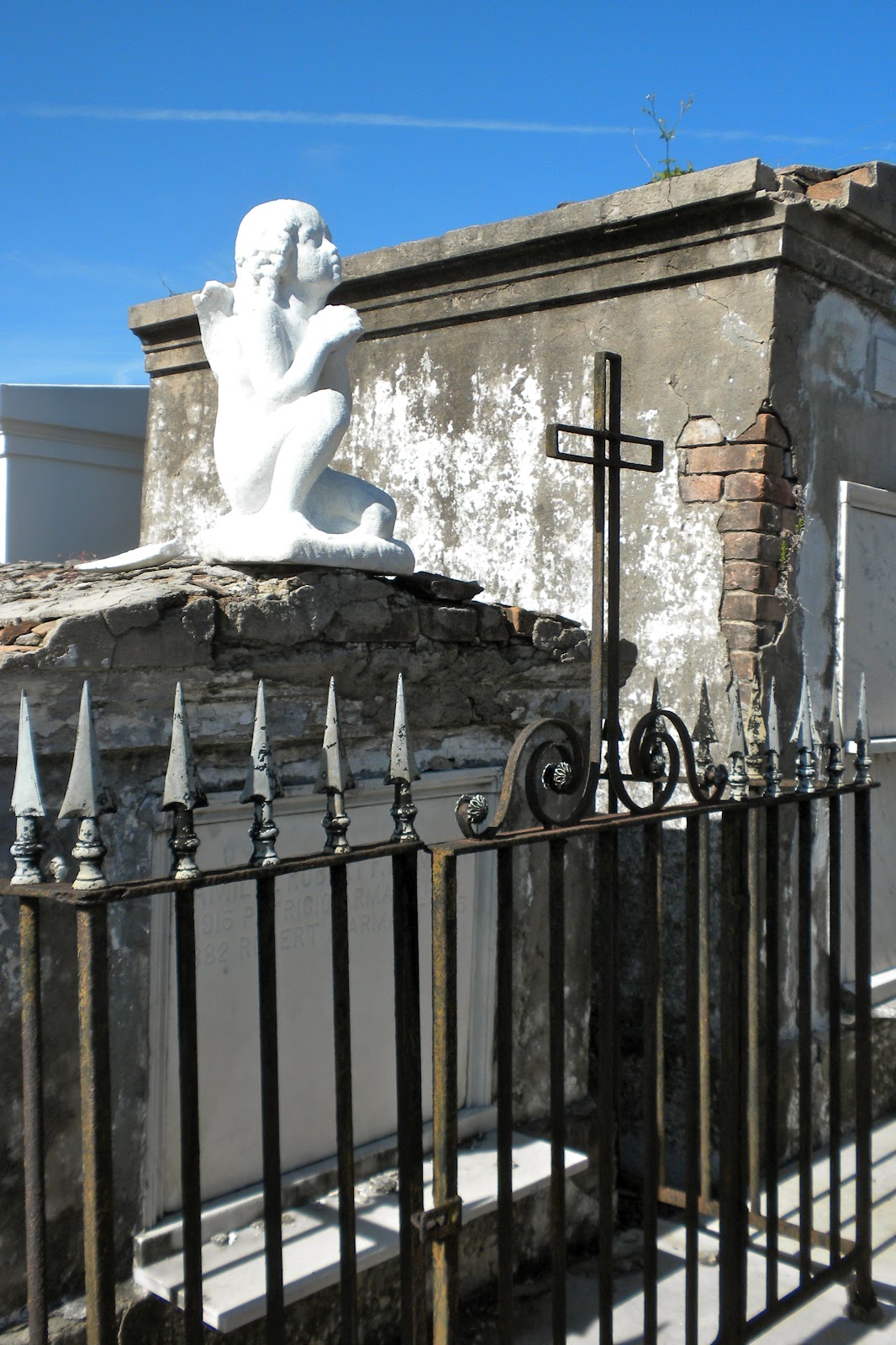
St. Louis Cemetery No. 1 is the oldest surviving Catholic cemetery in the city, dating back to 1789. Contrary to popular belief, the predominately above-ground burial methods employed at St. Louis Cemetery are a combination of form and function. Yes, they keep the dead from rising back to the surface given the low elevation of the area, but the cemetery's builders were heavily influenced by the growing trend in France toward vaulted burials. As a result, a few different styles of burial were developed and can still be observed today in the cemetery.

The first technique, wall vaults, can be immediately noticed as you enter the cemetery. The exterior walls of St. Louis Cemetery No. 1 consist of rows of stacked tombs where bodies were interred for a period of a year and a day. Given the intense heat and humidity in the city, bodies would decay rapidly, and after this initial period, the simple casket that had been used could be discarded, the bones would be pushed to the back of the tomb, and it could be reused by another person in the same family. A similar method was used in the family vaults, those these structures are free-standing and resemble modern day mausoleums.

For those individuals whose families could not afford a vault, they had the option of joining a society with burial privileges. Men could avail themselves of the facilities of military groups or fraternal organizations, while women could join a society based on religion or other mutual interests. On the other end of the spectrum were copings, or tombs made of raised dirt, enclosed in a retaining wall. Since these could only be used once and land was at a premium, these tended to be reserved for the wealthy.


I was excited to see the cemetery not only because of my preexisting interest and the fact that it's incredibly picturesque, but because it was used as a location for Easy Rider, a film that I watched numerous times in college while I was studying the counterculture of the 1960s. In the film, the main characters take a road trip to New Orleans for Mardi Gras and cavort through St. Louis Cemetery No. 1 with prostitutes while under the influence of various psychedelic drugs. Legend has it that nobody was, in fact, acting during that scene. After witnessing the debauchery they captured on screen, the Catholic Church forbade any other filmmakers from filming there.

Justin and I in the French Quarter. Apparently, we both decided to go the polo shirt route for Valentine's Day.
After a few hours spent walking in the hot sun, we found ourselves more informed about New Orleans' burial practices, and in possession of memory cards full of fantastic images. I seriously can't recommend an official cemetery tour enough if you find yourself in the city. The tour deposited us back in the French Quarter, and we spent some more time wandering around, searching for streets we hadn't yet seen, and plotting a course in the general direction of the Central Grocery.


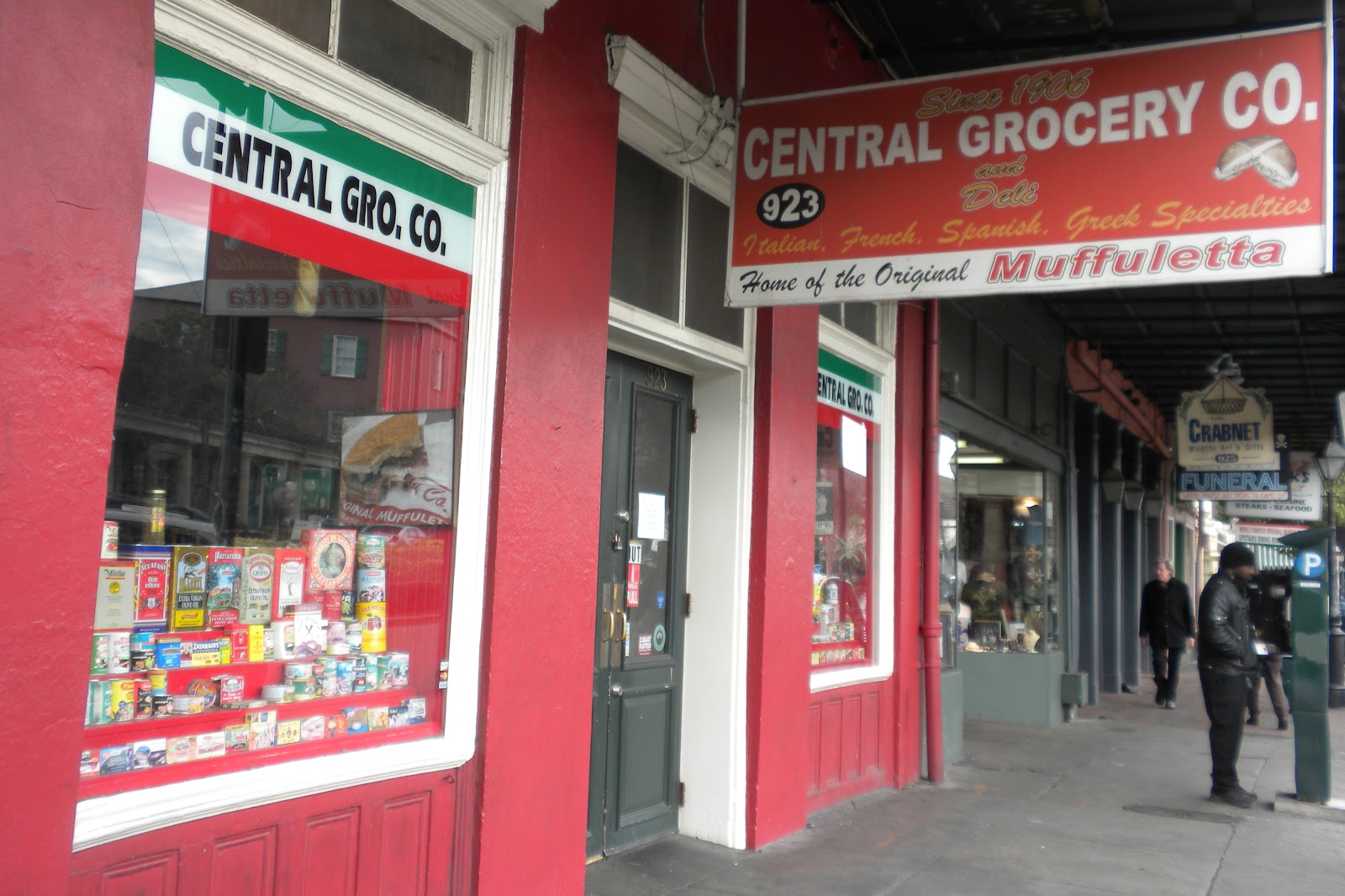
Having fulfilled one of my two objectives for the trip by going on a cemetery tour, it was time to pursue the other -- eating delicious things. The Central Grocery is an old, Italian deli known for creating the muffuletta, a sandwich of Italian cold cuts (usually capicola, salami, and mortadella), cheeses, and an olive and marinated vegetable salad on a large, round, sesame-studded roll. Their version launched a thousand imitators, and the muffuletta is now considered to be one of the iconic meals of New Orleans. 

Justin and I decided to take one to go (one is easily enough to feed two people), and picked up some sodas from Walgreens -- the cheapest option in the area -- and took our haul back to our hotel, where we sat cross-legged on the bed and had an impromptu picnic. It may not be the fanciest meal that was ever eaten to commemorate Valentine's Day, but it was, in its own way, very romantic.

2.13.2012

Laissez Les Bon Temps Rouler - Day Two

On our first full day in New Orleans, we voluntarily woke up bright and early to head over to Cafe du Monde, the famous purveyor of the French donuts known as beignets, for breakfast. Having seen the epic line outside the building the day before, we were determined to beat the crowds, and when we showed up at 8:30 in the morning, we were able to stroll right in and have a seat.


If you are in New Orleans, Cafe du Monde is an absolute must, if you ask me. They do one thing (beignets and their slightly bitter, chicory-laced coffee), and they do it very, very well, after many years of practice. The beignets are fried to order, and arrive on your table piping hot with a liberal dusting of powdered sugar on top. Beware of inhaling while you eat, and if you're smart, you'll try to situate yourself so that the wind in the open-air patio blows the powdered sugar away from you and not all over your clothes.  There are few things more delicious than a freshly-fried donut (I believe this is the basis for the success of the Krispy Kreme empire), and the ethereal beignets at Cafe du Monde are no different. I can't conceive of a better way to start your day in New Orleans.


Since we were in the neighborhood, we stopped by St. Louis Cathedral in Jackson Square, given my interest in ecclesiastic architecture. A Catholic church has stood on this site since 1718, though the current building dates back to the 1850s. It may be the oldest continuously operating Catholic cathedral in the United States, but it was far from being the most impressive church I've seen, architecturally speaking. The interior was quite plain, and it had some nice, but not particularly unique or impressive stained glass windows. The exterior has a distinctly European sensibility, but the interior lacks the flourishes and craftsmanship of its brethren across the pond.

Sculpture by Jaume Plensa in the Bestoff Sculpture Garden.
After our brief visit to the Cathedral, we hopped on a streetcar (a mode of transportation that is quaint, albeit not terribly efficient) and headed out to City Park, the vast green space on the northern edge of the city, not far from Lake Pontchartrain. Its proximity to the lake meant that it was almost entirely inundated following Hurricane Katrina, and the flood waters did extensive damage. Hundreds of centuries-old oak trees did not survive, and the New Orleans Botanical Gardens were completely wiped out. The park is administered by the state, which has made tremendous strides towards redeveloping the land, and the traces of the flood are all but invisible today.

The park is home to the New Orleans Museum of Art (which we decided to skip after reading several unfavorable comparisons to the Art Institute of Chicago), the aforementioned Botanical Gardens, an amusement park with a historic carousel, a fairytale-themed park for children, and the Besthoff Sculpture Garden. Of all these attractions, however, we only got to see the Sculpture Garden, as every other thing in the park (besides the art museum) was closed on Monday. Like I said, I really came into this trip unprepared in terms of advance planning.

The Besthoff gardens were pleasant enough though, even in the winter, though I'm sure their plants and flowers are even more lovely in the summertime. As it was, there seemed to be a preponderance of picturesque Spanish moss, which is apparently native to this part of the country. There was a decent variety of artists represented, including Claus Oldenburg, Robert Indiana, and even Jaume Plensa, the artist behind the Crown Fountain in Millennium Park. When Dad and I visited Barcelona in 2005, we visited Plensa's studio via an introduction through one of Dad's friend's with some serious art world connections, and he just so happened to be developing the idea for the series of sculptures that was represented in New Orleans. It's amazing how life unfolds, isn't it?


After walking through the park long enough to ascertain that all the other attractions were closed, we caught a streetcar back into the heart of the city and sought out lunch at Mother's, a hole-in-the-wall counter service joint with plenty of history and atmosphere. We went there on the advice of Stephen and his wife, and decided to go the po'boy route, ordering their famous Ferdi Special, a sandwich that features baked ham, sliced roast beef, and "debris." The love for debris, the scraps of meat that fall off into its accompanying juices when it is sliced, is most definitely a New Orleans thing. Neither Justin nor I were impressed with the roast beef and debris, and would have preferred a ham-only sandwich, though the sandwiches were tasty and filling nonetheless, though the debris-laden gravy made them exceptionally messy to consume.


Still without much of a plan, we improvised an agenda for the rest of our afternoon by hopping on the St. Charles streetcar with the intention of heading towards the Garden District to do a walking tour that was featured in the guidebook. I was bummed, as it was after 2:30, the closing time for Lafayette Cemetery Number 1, which is located in the historic neighborhood. As luck would have it, however, the city's somewhat lackadaisical approach to time frames meant that the cemetery's caretakers hadn't shown up yet to close the gates when we walked by, so we were able to walk around it a bit, albeit cautiously.


Justin was more concerned about being mugged, after reading that thieves like to hide in the labyrinthine walkways of the city's cemeteries and prey on tourists, but I was more concerned about keeping an eye on the gate at all times so we wouldn't get locked in if the caretakers showed up. Much as I love an atmospheric cemetery, I don't want to spend the night in one before my time! 


Following our brief turn through the cemetery, we embarked on the walking tour of the Garden District recommended by the guidebook. The Garden District developed largely between the 1830s and 1900, and attracted wealthy Americans who were drawn to the city's prosperity, but who didn't wish to mingle with the city's existing Creole population over in the French Quarter. The area where the Garden District was located also had the advantage of being at a slightly higher elevation, providing a natural defense against flood waters. As a result, the historic antebellum mansions of the historic neighborhood survived Hurricane Katrina with only minimal damage from its associated winds. 

We sauntered past the well-maintained "gingerbread" Victorian houses, and took in the elaborate landscaping that gives the area its name. We noted the houses that were for sale and tried to imagine what it would be like to live in one, if we had the means. Frankly, I think the upkeep would be too much of a pain, but I suppose if you could afford one of those houses, you could afford to have someone else paint, repair, and do your gardening for you.


By the time we had seen all there was to see, I had started to receive a string of text messages from Dad, who was keenly interested in our dinner plans for the evening. Given the size of our lunch, we were considering just grabbing a light snack in lieu of another big meal, but Dad wouldn't hear of it. He tried convince me that we needed to experience one of the city's famous historic restaurants in the French Quarter -- Antoine's, The Court of Two Sisters, Galatoire's, or Arnaud's -- that are known for their authentic regional and French-inflected fare, but I was resolute in my conviction that our travel budget couldn't support an outing to any of those places. Eventually, he ended up offering to pay for our dinner, minus the cost of what we would have paid for dinner if we'd chosen our own restaurant. 

I took him up on his offer, and we ended up at Arnaud's, where we enjoyed a very fancy meal in truly romantic surroundings. Given my failure to plan ahead for this trip, I'd been unable to get us reservations anywhere for Valentine's Day itself, so we decided to consider Arnaud's our big Valentine's Day celebration. There was surprisingly delicious turtle soup, an assortment of baked oysters for Justin, and I had a very delicate piece of fish topped with scallop mouse, wrapped in puff pastry that was whimsically decorated to look like a fish. When I ordered it, the waitress tried to warn me that it was "a lot of puff pastry." As if that's a bad thing!

We finished our meal with bananas foster, flambeed tableside. Flaming food is de rigueur in New Orleans, so we felt that it would be an appropriate way to end our evening. It ended up being a little too boozy-tasting for my palate, but Justin enjoyed it, and the show alone made ordering it worthwhile. Overall, I believe it was one of the most romantic dinners I've ever had, and it was a perfect segue into Valentine's Day...

2.12.2012

Laissez Les Bon Temps Rouler - Day One

For as long as I can remember, Justin and I have talked about visiting New Orleans. We talk quite a bit about the places we'd like to travel together, but for the most part, it's all just dreaming and hoping for as long as we're working our current not-particularly-lucrative jobs. We talk about experiencing exotic locales all over the world together, and exploring places closer to home as well. New Orleans, however, has always been on the table. For one, Justin likes it there -- he went a couple years ago for a friend's wedding and enjoyed enough to want to go back. Furthermore, I hadn't been there since I was a very small child and my mother and grandparents took me there on a trip that I can't begin to remember.

If you recall, last year I even signed us up for a New Orleans-themed cooking class as a surprise for Justin, because our hypothetical trip was so dear to our hearts, and at the time, there was no way we could afford to go. Things changed, however, in November, when my dad discovered that he had a massive surplus of frequent flyer miles that were about to expire. Being the sort of person who likes to delegate his menial chores to others, Dad told me to figure out how to dispose of his miles. Suddenly, a free flight to the Big Easy was in the cards.

I booked it with an eye towards taking a romantic getaway over Valentine's Day, and as it turns out, Dad has a client with connections at the very elegant, exceptionally well-located Roosevelt Hotel in the city who was able to help us get a special deal on a room that would otherwise be well outside our meager means. All thanks to Dad's generosity, we were well on our way.

Since American's frequent flyer program restricts your flight options in exchange for giving you free airfare, we were stuck with a 7:30 am flight. When we got to the airport, we discovered that that our departure time had been changed without us knowing, and it was actually leaving at 6:30. Thankfully, I manage my travel-related anxiety by getting to the airport ludicrously early, so we still had sufficient time to get through security and hike across the never-ending expanse that is O'Hare in time to board our flight.

We arrived on the day of Barkus, the canine Mardi Gras parade that spoofs the name of the super-krewe known as Bacchus. As a result, the French Quarter was swarming with dogs in cute costumes and their fair share of beads.
Justin's friend, Stephen, was kind enough to fetch us from the airport at the ungodly hour at which we arrived, and he and his wife took us out to brunch at Elizabeth's, a quirky neighborhood restaurant popular with locals for its incredible brunch menu. The two college buddies were able to catch up over such delicacies as praline bacon, but our four in the morning alarm was having a marked effect on me, and I was fading fast. After brunch, Stephen and his wife dropped us off at the hotel so we could check in and take a much-needed nap. 

Mardi Gras beads adorning a doorway in the French Quarter.
Feeling better-rested, we strolled over to the French Quarter, a short distance from our hotel, and meandered around. Since we had been so busy with our move in the weeks leading up to our trip, I had done a completely uncharacteristic lack of planning for our time in New Orleans. As Dad will attest, I usually go into my vacations with a rigorous schedule of sight-seeing in mind, determined not to miss any opportunity to see everything of interest. However, with this trip, I merely had a vague goal of seeing some of the city's scenic cemeteries, and eating delicious food. Neither would be difficult to accomplish given the abundance of riches in both departments, but as a result, we spent a lot more time wandering around and soaking in the local atmosphere than I usually do when I'm out of town.


On the recommendation of the foodie blogosphere (basically the only research I did for the trip before we left), we stopped for a snack at Meltdown, a popsicle shop with unique and truly magnificent offerings. Justin sampled their Mexican chocolate ice pop, and, predictably, I went with salted caramel and it blew my mind. Originally, Justin and I had planned to split our popsicles so we could each have some of both, but as soon as I tasted mine, all plans for sharing went right out the window. Come summer, I will be trying to recreate that frozen delight, I promise you.


We spent our afternoon wandering through the faded splendor of the French Quarter, taking in the wrought-iron balconies, sprawling potted plants, peeling paint, and crumbling plaster. Much of the appeal of the neighborhood is in its elegant dilapidation, and I found myself wondering if people ever make the effort to restore things to a state of newness, or if they try to keep everything in a state of charming disrepair on purpose.

For dinner, we stopped at Cafe Maspero, a restaurant located on the tourist-centric Decatur Street not far from Jackson Square. The guidebook recommended it on the basis of having cheap and plentiful food, and while it wasn't the most delicious meal I've ever had, the heaps of fried shrimp and jambalaya fortified us after a long day.

Since partying and boozing it up isn't really our style, we decided to turn in early for the night, but not before walking back to our hotel along Bourbon Street to take in the debauchery. We did not partake, but we observed the seemingly endless procession of strip clubs, sex shops, and bars serving frighteningly large portions of alcohol being consumed in the streets by an interesting mix of young revelers and couples pushing strollers. It was still early, but it's disconcerting to see people toting babies around while sipping from a super-sized daiquiri. Even if it wasn't our scene, Bourbon Street is not a sight to be missed...